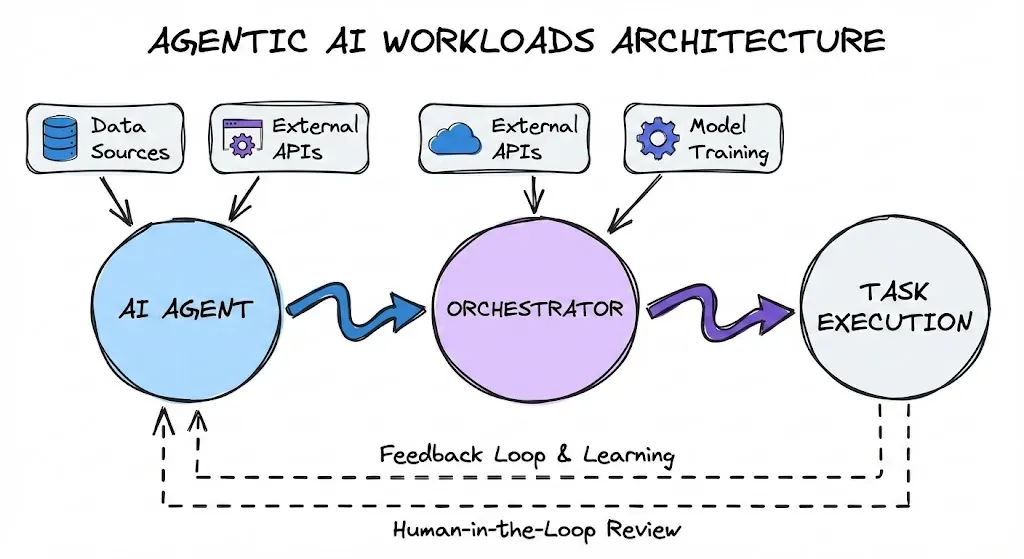
The Platform Engineering assistant has a goal of helping DevOps, Platform Engineers, and SREs find a solid balance between helping with implementation from an autonomy perspective. The important thing to keep in mind is there are different levels on autonomy ranging from just about zero control of what the Agent can access and the actions it can perform to an Agent having full control of an environment.
- Hardware decisions for running Models locally (coming soon)
- Deploy the broken app
The app is intentionally broken, so the goal is to use Agentic AI to fix it.
- Deploy kagent
- vLLM and llm-d configuration (coming soon)
- Create an Agent
- Agentgateway installation & configuration
- MCP Server configuration
- Metrics and Traces for Agentic traffic (coming soon)
- Agent Identity (coming soon)
- Implementing Agent Registry for Shadow AI (coming soon)
- Researcher Agent + Agent Evals For Platform Engineering Tasks
7 labs, 9 coming soon
Sandboxes are something that many organizations have implemented for workloads. The goal is whatever is running is the sandbox is isolated from everything EXCEPT what it needs to perform its action. No access to the outside world, files/folders, projects, teams, cloud providers, etc... In the world of Agentic AI, we're now seeing the idea around Agent Sandboxes pop up as well for the same thing - isolation, except for Agent runs.
- Install Sandbox
- Using Kagent Substrate
- Hermes With Kagent + Agent Substrate
- Egress With Agentgateway For Substrate
5 labs
The labs within this section go over Agent Substrate in a standalone fashion. No runtime on top of it. Raw Agent Substrate to understand the internals of Substrate and how it works underneath the hood.
- Substrate Components
- Install Agent Substrate
- Your First Actor
- Multi-Tenant Actors
- MicroVM As Your Isolation Layer
- Request Parking
- Multiplexing Actors
- Substrate Observability
- One Worker, Many Actors
- ReBAC With OpenFGA and Substrate
- Cost Optimization With Substrate
11 labs
There's nothing like waking up at 2:00 AM to an alert and having to stay awake for 1.5 hours looking through logs with no end in sight to actually figuring out the issue. On the opposite, yet same spectrum, what if you're deploying a new application stack or piece of infrastructure and something goes wrong? Your first thought is to go look at logs, traces, metrics, only to be bogged down by it.
- Create an Agent
- Test the Agent locally (coming soon)
- Set up long-term memory management (coming soon)
- Implementing web search/RAG (coming soon)
- Implement Agent Skills (coming soon)
- Adding agentgateway for an AI Gateway (coming soon)
- Implementing Agent Registry to store Skills and Prompts (coming soon)
1 lab, 6 coming soon
The autonomous k8s engineer takes autonomy to a whole other level. It can figure out what is going on, fix the issue, deploy what is needed, and ensure the environment is running smooth all without you having to even know about it.
- Deploy kagent with OpenAI
- Deploy demo app
- Scale Pods down
- Deploy the self-healing agent
- Log checks
- Deploy the self-healing checker
6 labs